Rigid Box Styles Explained: Magnetic, Drawer, Lift-Off, Book and Shoulder
How each rigid box construction opens, the space it takes up, and which products each one suits.
What makes a box rigid in the first place?
A rigid box is built from greyboard, a dense pressed board usually between 1.5 mm and 3 mm thick. The board is cut, scored, glued into shape and then wrapped in paper.
That wrap is usually a printed or plain paper of about 120 to 157 gsm. It folds over the top edge and runs 15 to 20 mm down the inside walls. The result does not flex like a folding carton, so it keeps its shape on a shelf and in a drawer for years.
The style is how the lid, sleeve or flap meets the base. That choice decides the opening moment, the board you pay for and how the box behaves in the post.
How does a magnetic closure box open?
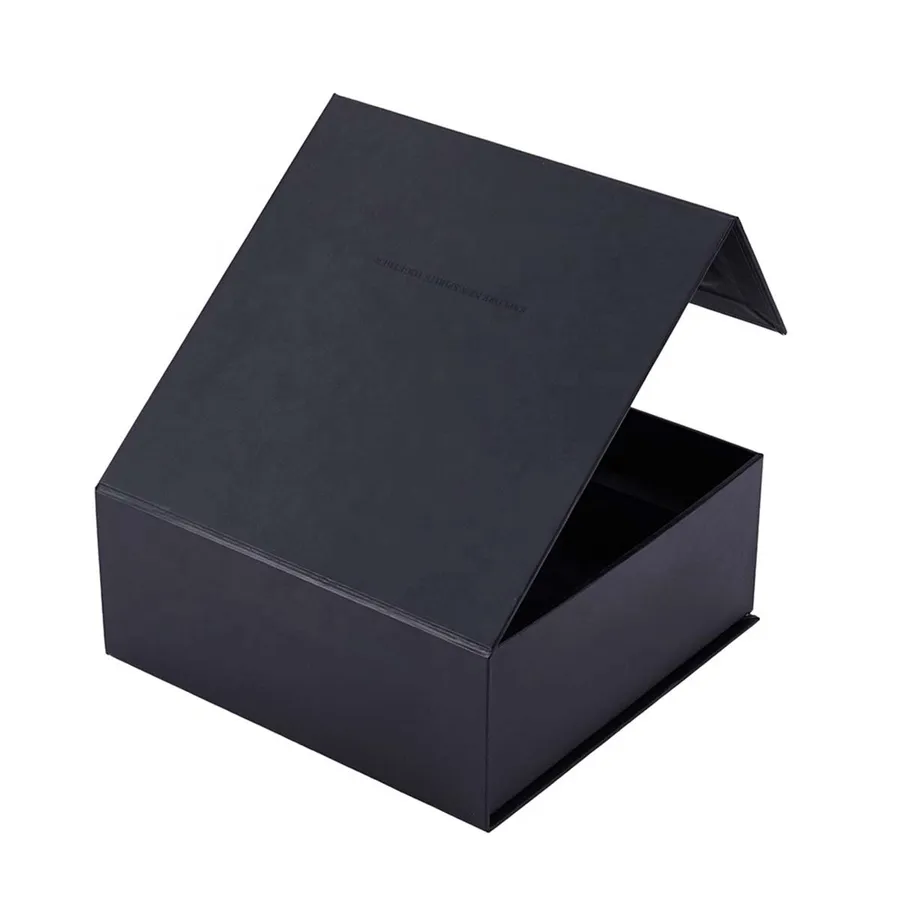
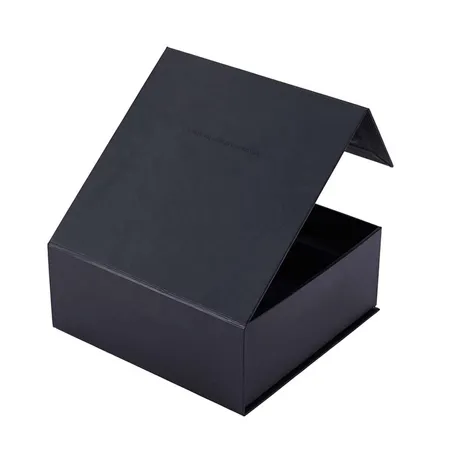
A magnetic box is a base with one wrapped panel. That panel runs up the back, across the top and down the front as a flap. Thin disc magnets, often 10 to 15 mm across, sit under the wrap in the flap and in the front wall of the base.
When the flap drops, the magnets pull it shut with a soft click. Two magnets suit a front up to about 250 mm wide. Wider fronts usually take three, so the flap lies flat end to end.
The back hinge is a strip of wrap paper across a gap in the board. The lid opens to about 100 degrees and rests there. Our magnetic closure boxes made to size show how deep the flap can run down the front.
Sliding drawer boxes: a tray inside a sleeve
A drawer box has two parts. An open tray slides into a four-sided sleeve, and the customer pushes it out from one end.
Clearance matters more here than anywhere else. A tray 1 mm narrower than the inside of the sleeve slides smoothly. At 0.5 mm it sticks, and at 3 mm it rattles and drops out when tipped.
The pull is usually a ribbon tab glued under the tray floor, about 10 mm wide, or a thumb cut-out in the sleeve end. See the sliding drawer boxes with ribbon pulls for both options side by side.
Lift-off lids and shoulder boxes
A lift-off lid box is two separate trays, a base and a slightly larger lid that drops over it. A full-depth lid covers the base down to the table. A part lid stops 20 to 30 mm down and leaves a band of base showing.
A shoulder box adds a third part, a neck that stands 10 to 15 mm proud of the base. The lid rests on a ledge where neck meets base, so the outer walls line up flush. It lifts off with a slow draw of air.
That neck can be wrapped in a contrast colour, which gives a thin stripe when the lid comes off. The shoulder boxes with a contrast neck page shows the ledge clearly.
Book-style and hinged lid boxes
A book-style box opens like a hardback. The cover is a wrapped board about 3 mm larger than the base on each edge. A spine panel matches the box depth.
The closure can be a magnet in the front edge, a ribbon tie or nothing at all, relying on the board weight. Brands like it because the inside cover takes a printed message that faces the reader as the box opens.
A hinged lid box is the smaller cousin. Its lid is joined along the back edge and closes onto the base like a jewellery case. Our book-style rigid boxes with printed covers show the spine and the inside cover together.
When is a collapsible or tube box the better choice?
A collapsible rigid box is delivered flat. The side walls fold up and the magnetic lid flap holds them in place. Until packing day, it takes a fraction of the storage space.
Once built, it looks much like a magnetic box from the outside, although the inner walls show fold lines. If you store a few hundred boxes in a small unit, the collapsible rigid boxes that store flat are worth comparing.
Tube boxes are round: a base cylinder, a lid and often an inner neck. They suit rolled scarves, candles and hats, and they read as a gift from across a room.
Rigid box styles side by side
The table compares the main constructions on how they open, how they ship and what they usually carry.
| Style | How it opens | Ships | Usually carries |
|---|---|---|---|
| Magnetic closure | Front flap pulled shut by hidden magnets | Made up | Gift sets, apparel, corporate kits |
| Sliding drawer | Tray pushed out of a sleeve | Made up | Jewellery, chocolates, small sets |
| Lift-off lid | Lid lifted straight up off the base | Made up, lid and base nested | Shirts, shoes, hampers |
| Shoulder | Lid rests on a raised neck, flush outside | Made up | Fragrance, candles, watches |
| Book-style | Cover swings open like a hardback | Made up | PR kits, launch packs, stationery |
| Hinged lid | Lid joined at the back, closes onto base | Made up | Rings, bangles, business cards |
| Collapsible | Folds up and locks with magnets | Flat | Large gift boxes, stored stock |
| Tube | Round lid pulled off a cylinder | Made up | Scarves, hats, round gifts |
Made-up boxes take far more space than flat ones. A pallet that holds a few thousand flat collapsible boxes may hold only a few hundred made-up magnetic ones.
Which style suits which product?
Start from the object and the moment you want. A slow reveal favours a shoulder or lift-off lid; a story told inside the cover favours a book style.
The full set of constructions, with photos of each, sits in our range of rigid box constructions.
- Flat, light items such as a folded shirt or a scarf: a full-depth lift-off lid about 40 to 60 mm deep.
- Small precious pieces such as earrings or a ring: a drawer or hinged lid with a fitted insert.
- Bottles and jars that stand upright: a shoulder box, so the neck steadies the lid.
- Mixed kits with a note card: a book-style or magnetic box with a printed inside lid.
- Orders you store for months before packing: a collapsible box that arrives flat.
- Round or rolled items: a tube box sized to the diameter plus 3 to 4 mm.
Choosing a style in five steps
This is the order we use when a buyer is unsure which construction to ask for.
You can send both options on one written quote request for rigid boxes and we price them side by side.
- Measure the product, or the full set, in millimetres at its widest points.
- Decide whether the box is opened once, like a send-out, or kept and reopened, like a watch case.
- Check where boxes will be stored before packing; if space is tight, lean towards collapsible.
- Pick the opening that suits the product shape from the table above.
- Ask for a written quote on two styles if you are torn, and compare them on the free proof.
Common mistakes when picking a construction
The most common one is choosing a magnetic box for something heavy and loose. The magnets hold the flap shut, but a loose 600 g item can knock it open in a parcel. An insert stops that movement.
Another is ordering a drawer box without room for the pull. A ribbon tab needs about 3 mm extra at the tray end, or it jams against the sleeve.
Finally, people forget the outer carton. A made-up rigid box always travels inside a shipping box. Make that outer box 5 to 10 mm bigger on each side, with paper fill around it.